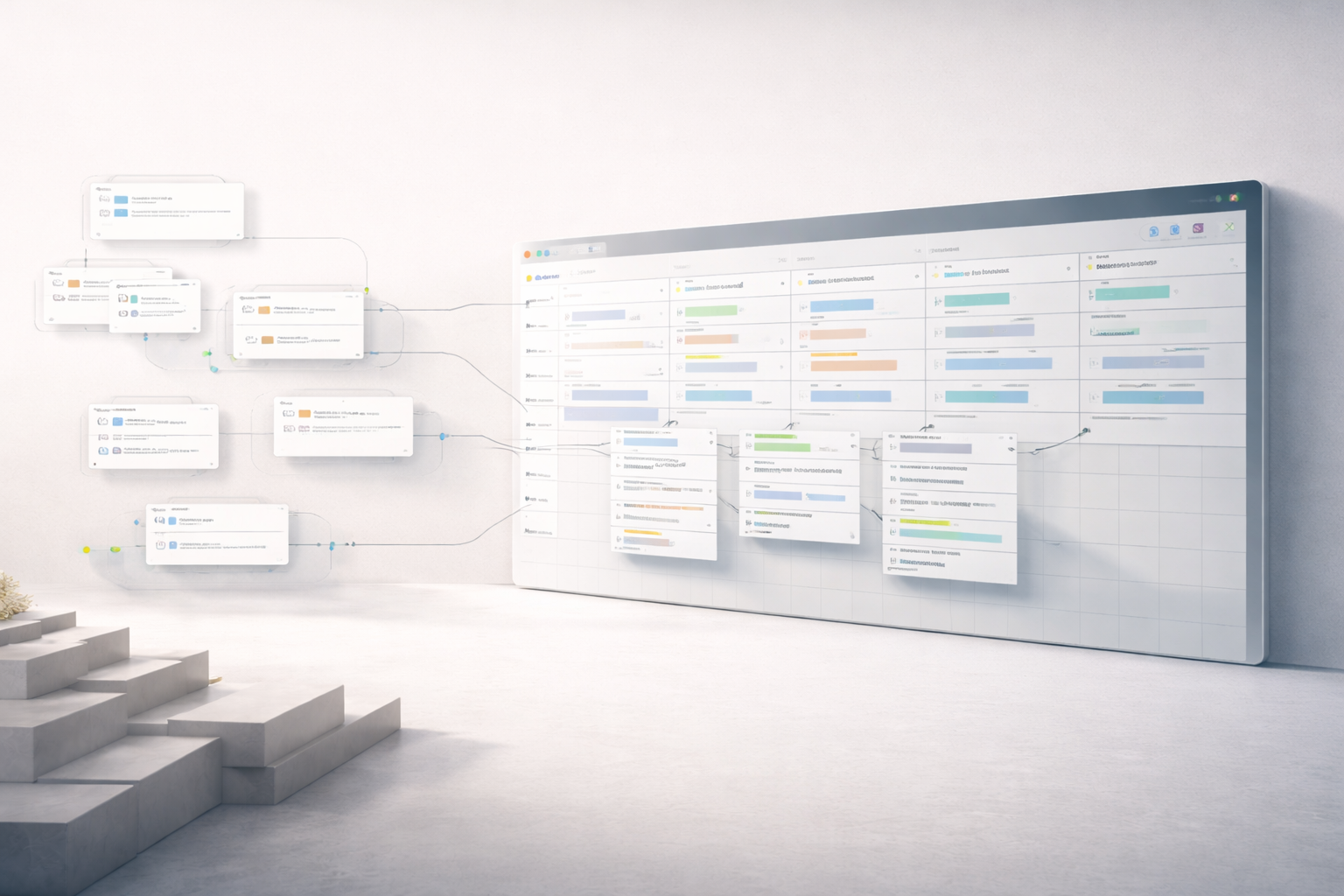
Digital Transformation for SMBs in 2026 Starts With Systems, Not Tools

Across the United States, small and mid sized businesses are under increasing pressure to modernize operations. From New York and Chicago to Austin and Miami, SMB leaders are investing in software, automation and AI in the name of digital transformation. Yet despite record spending on tools, many organizations see little improvement in speed, clarity or operational efficiency.
The reason is simple. Digital transformation fails when it starts with tools instead of systems.
In 2026, successful digital transformation for SMBs is no longer about adopting the latest platform or migrating data into new software. It is about designing operational systems that connect people, data, workflows and automation into a coherent execution model. Without this foundation, even the best tools create fragmentation rather than leverage.
This shift from tools to systems defines the next phase of digital transformation.
Why tool driven digital transformation keeps failing SMBs
Most SMB digital transformation efforts follow a familiar pattern. A company adopts a new CRM, adds a project management tool, integrates automation software and experiments with AI. Each decision is reasonable in isolation. Together, they create operational chaos.
Common symptoms include:
- Data duplicated across platforms
- Manual work between automated steps
- Teams operating with different versions of the truth
- Automation that breaks when processes change
- No clear ownership of workflows
- AI features disconnected from real operations
Research on modular and composable technology stacks shows that organizations struggle when systems evolve faster than their operational design. McKinsey highlights that modernization efforts fail when technology adoption outpaces system architecture and execution discipline:
https://www.mckinsey.com/capabilities/business-building/our-insights/how-a-tech-start-up-tackles-legacy-systems-with-composable-tech-stacks
SMBs feel this pain more acutely than enterprises because they lack large IT teams to manually hold systems together. Tool sprawl becomes operational debt.
Digital transformation as a system, not an initiative
Digital transformation is often framed as a project with a beginning and an end. In practice, it is a system design problem.
A system includes:
- Core data models
- Workflow logic
- Decision rules
- Automation triggers
- Human handoffs
- Governance and ownership
When these elements are not designed together, technology adoption produces complexity rather than leverage.
In contrast, system driven digital transformation asks different questions:
- How does information flow from one team to another
- Where are decisions made and by whom
- What actions should be automatic versus manual
- Which data is authoritative
- How does the system adapt when the business changes
This mindset shift is critical for SMBs that need flexibility without instability.
Systems thinking applied to SMB operations

Systems thinking forces organizations to view operations holistically rather than department by department.
For example, inventory is not just an operations function. It affects pricing, marketing, finance and customer experience. When each department manages its own tools, inventory becomes fragmented across spreadsheets, dashboards and emails.
A system driven approach unifies these layers into a single operational model.
This is why platforms like Airtable OMNI are gaining traction among SMBs. They enable companies to model operations relationally, connecting data, workflows and automation in one place rather than stitching together dozens of tools.
Singular Innovation frequently works with SMBs that have already invested in software but lack a coherent operational system. Instead of adding more tools, the focus shifts to designing a system architecture that makes existing technology work together.
Learn more about how Singular Innovation approaches operational system design:
Operational architecture as the foundation of execution
Operational architecture is the missing layer in most digital transformation initiatives.
It defines:
- How workflows are structured
- How data moves through the organization
- How automation supports execution
- How exceptions are handled
- How systems evolve over time
Without operational architecture, automation becomes brittle and AI becomes disconnected experimentation.
SMBs that succeed in digital transformation typically invest first in defining their operational architecture, even before selecting tools. This ensures that technology choices reinforce execution rather than dictate it.
This approach aligns with how modern composable systems are designed. Instead of monolithic software, organizations build adaptable operational layers that evolve as the business grows.
Why AI and automation amplify systems, not replace them

AI and automation are execution accelerators, not substitutes for system design.
When applied to poorly designed workflows, automation increases error speed. When applied to well designed systems, automation multiplies leverage.
The same applies to AI. AI models generate value only when they are embedded inside operational workflows where decisions are made and actions occur.
For example:
- AI generated product content must be tied directly to inventory and pricing systems
- AI forecasting must feed into procurement and operations workflows
- AI agents must act within governed processes, not outside them
Research on AI driven content and operations shows that AI delivers value when connected to structured systems, not when deployed as standalone tools:
https://www.inriver.com/resources/ai-for-product-content-creation/
This reinforces the principle that systems come first. AI and automation come second.
The SMB advantage in system driven transformation
Unlike large enterprises, SMBs are not burdened by decades of legacy infrastructure. This gives them a structural advantage in digital transformation, if they avoid replicating enterprise complexity.
SMBs can:
- Design systems from scratch
- Choose flexible platforms
- Avoid rigid ERPs
- Iterate quickly
- Align technology closely with operations
This is why many SMBs are replacing traditional ERP approaches with lighter operational systems built on platforms like Airtable OMNI. These systems prioritize execution speed, adaptability and clarity.
Singular Innovation supports this model by working with on demand product teams that help SMBs design and implement operational systems efficiently. This allows companies to execute transformation initiatives faster and at price points significantly more accessible than traditional U.S. consulting models.
Explore real examples of these systems in action
From fragmented tools to unified execution
The practical outcome of system driven digital transformation is operational clarity.
Instead of asking which tool to adopt next, SMBs begin asking:
- What system do we need to run the business
- Where should data live
- Which workflows drive value
- How do we measure execution
Tools then become implementation details rather than strategic decisions.
This shift reduces operational friction, increases accountability and creates a foundation for sustainable automation and AI adoption.
What digital transformation looks like in practice for SMBs
In practice, system driven digital transformation includes:
- A single operational data model
- Clear workflow ownership
- Automation tied to business rules
- AI embedded where decisions occur
- Visibility across teams
- The ability to adapt without rebuilding everything
This approach replaces fragmented initiatives with a coherent execution engine.
Singular Innovation positions itself in this execution layer. Not as a strategy consultant, but as a system builder that helps SMBs move from intent to implementation through operational architecture and on demand product teams.
Learn more about their approach and capabilities:
Conclusion
Digital transformation for SMBs in 2026 starts with systems, not tools. Technology alone does not transform operations. Systems do.
By applying systems thinking, designing operational architecture and embedding automation and AI into execution workflows, SMBs can achieve real digital transformation without enterprise complexity.
Those that continue to chase tools will accumulate operational debt. Those that build systems will compound advantage.
If you want to evaluate whether your current tools support a real operational system, Singular Innovation offers a free 30 minute diagnostic.
This session helps assess your existing setup, identify execution gaps and design the best operational architecture for your business.
Schedule your free 30 minute diagnostic
This article was developed with the assistance of AI tools and reviewed by the Singular Innovation team for accuracy and context.
Heading
Dolor enim eu tortor urna sed duis nulla. Aliquam vestibulum, nulla odio nisl vitae. In aliquet pellentesque aenean hac vestibulum turpis mi bibendum diam. Tempor integer aliquam in vitae malesuada fringilla.
Mi tincidunt elit, id quisque ligula ac diam, amet. Vel etiam suspendisse morbi eleifend faucibus eget vestibulum felis. Dictum quis montes, sit sit. Tellus aliquam enim urna, etiam. Mauris posuere vulputate arcu amet, vitae nisi, tellus tincidunt. At feugiat sapien varius id.
Heading 3
Eget quis mi enim, leo lacinia pharetra, semper. Eget in volutpat mollis at volutpat lectus velit, sed auctor. Porttitor fames arcu quis fusce augue enim. Quis at habitant diam at. Suscipit tristique risus, at donec. In turpis vel et quam imperdiet. Ipsum molestie aliquet sodales id est ac volutpat.
Tristique odio senectus nam posuere ornare leo metus, ultricies. Blandit duis ultricies vulputate morbi feugiat cras placerat elit. Aliquam tellus lorem sed ac. Montes, sed mattis pellentesque suscipit accumsan. Cursus viverra aenean magna risus elementum faucibus molestie pellentesque. Arcu ultricies sed mauris vestibulum.
Heading 4
Morbi sed imperdiet in ipsum, adipiscing elit dui lectus. Tellus id scelerisque est ultricies ultricies. Duis est sit sed leo nisl, blandit elit sagittis. Quisque tristique consequat quam sed. Nisl at scelerisque amet nulla purus habitasse.

Heading 5
Morbi sed imperdiet in ipsum, adipiscing elit dui lectus. Tellus id scelerisque est ultricies ultricies. Duis est sit sed leo nisl, blandit elit sagittis. Quisque tristique consequat quam sed. Nisl at scelerisque amet nulla purus habitasse.
"Ipsum sit mattis nulla quam nulla. Gravida id gravida ac enim mauris id. Non pellentesque congue eget consectetur turpis. Sapien, dictum molestie sem tempor. Diam elit, orci, tincidunt aenean tempus."
Heading 6
Nunc sed faucibus bibendum feugiat sed interdum. Ipsum egestas condimentum mi massa. In tincidunt pharetra consectetur sed duis facilisis metus. Etiam egestas in nec sed et. Quis lobortis at sit dictum eget nibh tortor commodo cursus.
What is Singular Innovation
Lorem ipsum dolor sit amet, consectetur adipiscing elit. Suspendisse varius enim in eros elementum tristique.