How SMBs Are Adopting AI in 2025. Trends. Workflows and Real Use Cases

AI adoption in small and mid sized businesses has accelerated rapidly. Tools are more accessible. cost of implementation has dropped and SMBs are under pressure to automate workflows without growing headcount.
This guide explains how SMBs are adopting AI across operations. what trends matter and how small companies can implement AI with low risk.
1. Why AI adoption accelerated in SMBs
1.1 Lower implementation cost
Instead of full engineering teams. SMBs now use:
• low code tools like Make. https://www.make.com/en/help
• automation platforms like Zapier. https://zapier.com/blog/ai-automation
• Airtable Automations for structured workflows. https://support.airtable.com/docs/automations-overview
• modular AI APIs such as OpenAI. https://platform.openai.com/docs
• AI assistants like Perplexity. https://www.perplexity.ai
These tools let SMBs prototype and launch AI workflows quickly.
1.2 The rise of AI powered operations
SMBs now automate:
• documentation
• email workflows
• customer support
• lead qualification
• data analysis
• internal knowledge management
1.3 Pressure to improve productivity
AI enables SMBs to scale output without expanding payroll. which is a critical advantage in 2025.
2. Top AI adoption trends in SMBs for 2025
2.1 AI driven workflow automation
Workflow automation is the fastest growing use case.
Routing tasks. extracting data and generating summaries are now daily operations for SMBs.
https://singularinnovation.com/post/how-to-build-ai-workflow-from-scratch
2.2 Custom AI agents for internal operations
Operational agents handle internal communication. reporting. support routing and updating systems.
https://singularinnovation.com/post/ai-automation-for-smbs-2025
2.3 Growth of no code AI
SMBs avoid heavy engineering by using:
• FlutterFlow
• Bubble
• Retool
• Notion AI
• ClickUp
https://singularinnovation.com/post/no-code-ai-tools-2026
2.4 AI powered customer support
Support agents trained on business documentation now answer repetitive questions with accuracy.
OpenAI has documentation on building retrieval based agents.
2.5 AI driven decision making
Tools like Perplexity, help SMBs extract insights and interpret data faster.
3. Business areas with highest AI impact
3.1 Sales
AI helps with forecasting. CRM updates and email generation.
3.2 Marketing
AI supports content creation. segmentation and competitor analysis.
3.3 Customer service
AI agents answer FAQs. manage ticket routing and escalate complex issues.
3.4 HR
Agents assist with onboarding. document delivery. scheduling and candidate screening.
3.5 Finance
Tools automate invoice extraction. reconciliation and reporting.
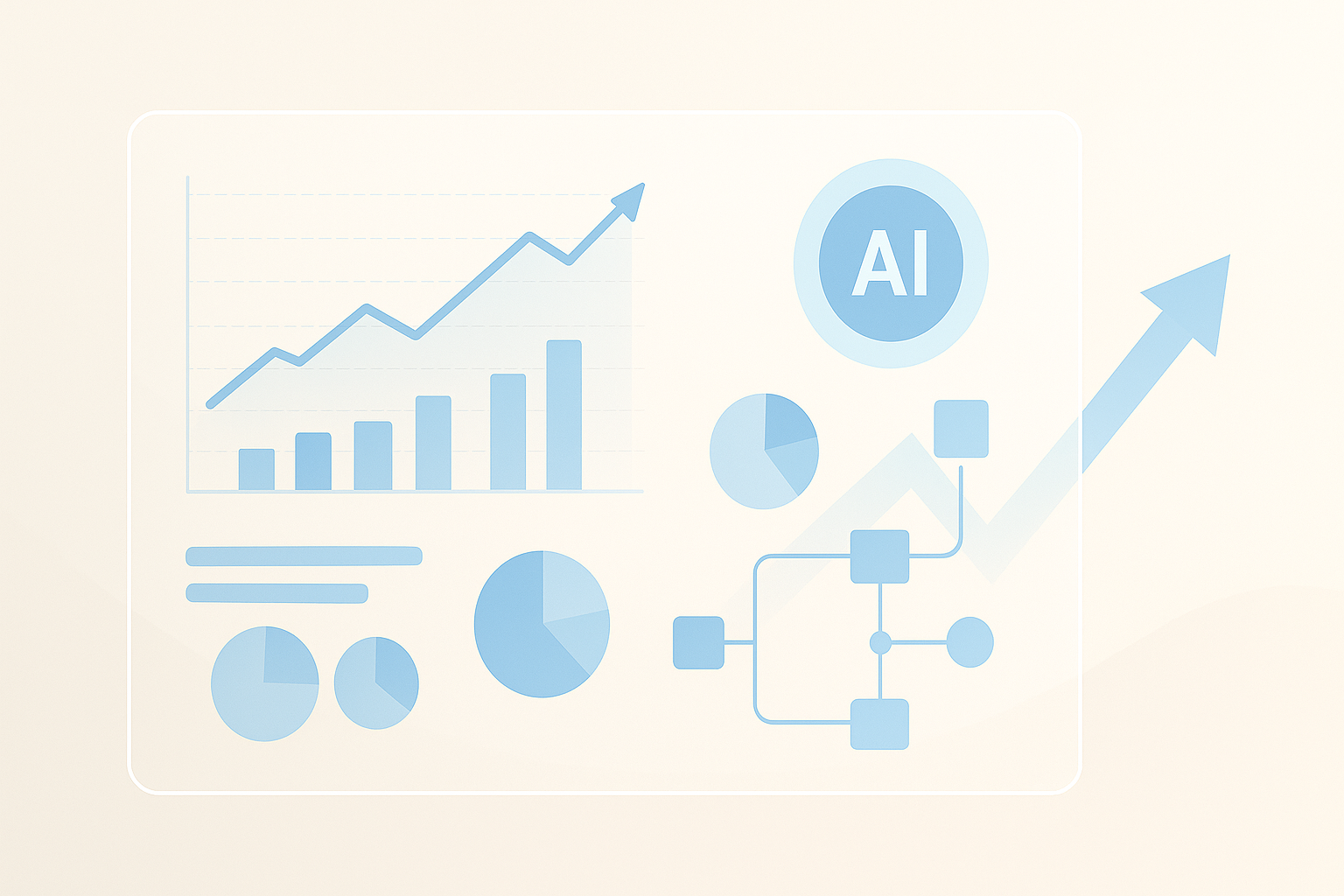
4. Real world SMB AI adoption examples
4.1 Internal communications automation
AI summarizes Slack messages and generates daily updates.
Slack AI reference.
4.2 Lead qualification automation
AI validates incoming leads. enriches data and pushes records into CRM platforms.
4.3 Customer support AI agent
Support agents trained on internal docs respond instantly.
Examples can be built with OpenAI.
4.4 Automated reporting
AI aggregates data and creates weekly reports without manual spreadsheets.
4.5 AI onboarding assistants
Agents guide new hires through documentation and task lists.
5. Tools SMBs use to adopt AI in 2025
5.1 Workflow automation
• Zapier. https://zapier.com/blog/ai-automation
• Make. https://www.make.com/en/help
• Airtable Automations. https://support.airtable.com/docs/automations-overview
5.2 AI agents and development
• OpenAI API. https://platform.openai.com/docs
• Vercel AI SDK. https://vercel.com/docs/ai
• LangChain
• Perplexity. https://www.perplexity.ai
5.3 Productivity platforms
• ClickUp
• Notion
• Slack AI.
5.4 No code builders
• FlutterFlow
• Bubble
• Retool
https://singularinnovation.com/post/flutter-vs-flutterflow-smb-ai-process-guide-nocode
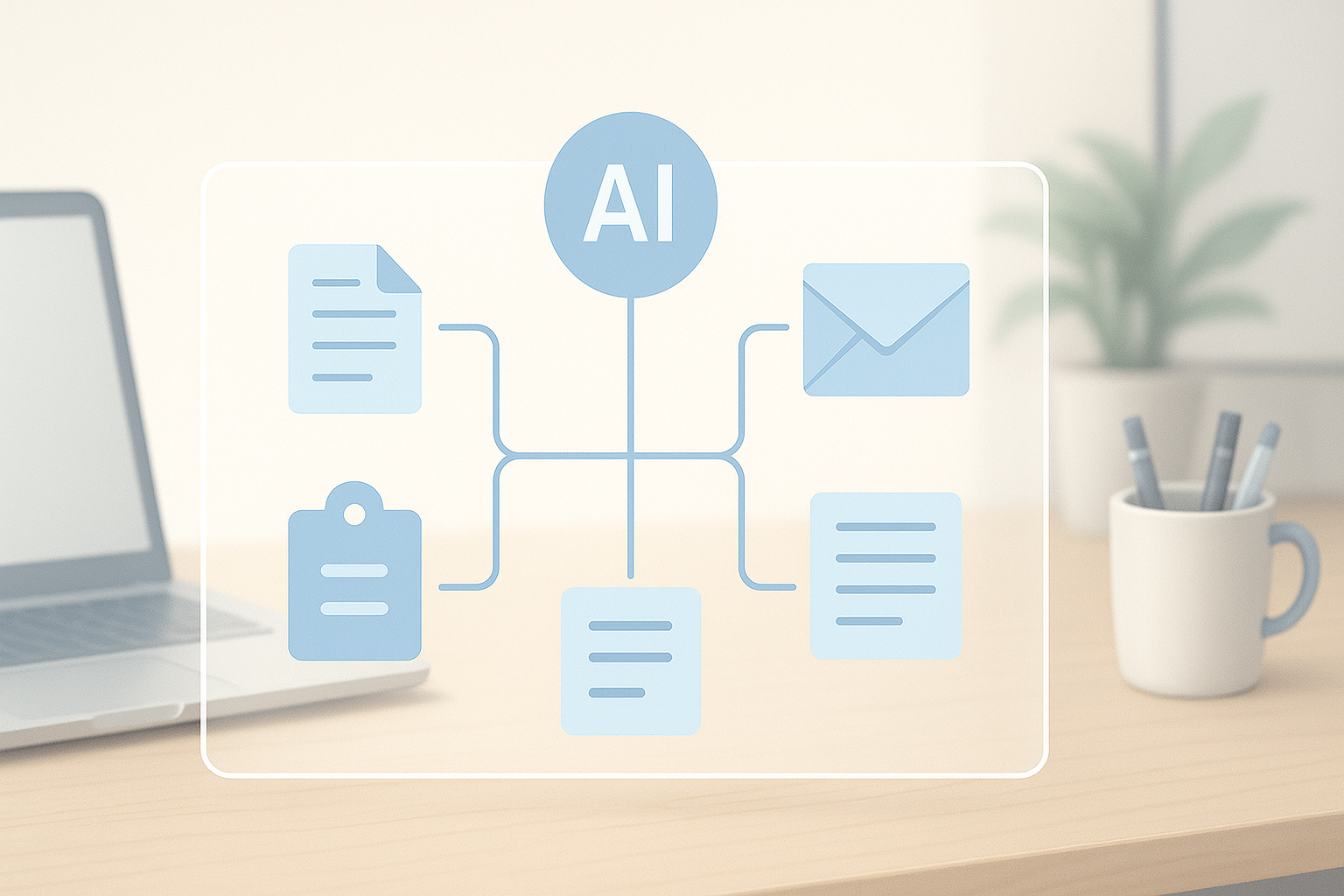
6. How SMBs can adopt AI. a practical roadmap
Step 1. Identify one workflow to automate
Choose one repetitive or slow task. not a whole department.
Step 2. Map the current workflow
Inputs. steps. outputs.
https://singularinnovation.com/post/how-to-build-ai-workflow-from-scratch
Step 3. Choose the simplest tool
Start with Make. Zapier or Airtable. not custom engineering.
Step 4. Build a small automation
Small wins increase adoption and reduce resistance.
Step 5. Add an AI agent when workflow is stable
Agents should come after workflow clarity.
Step 6. Measure results for 30 days
Time saved. errors reduced. cost impact. team adoption.
7. Common mistakes SMBs make
7.1 Starting too big
Large projects fail because they lack clarity.
7.2 Choosing tools before mapping workflows
Tools are not a strategy. workflows are.
7.3 Ignoring team training
People need clarity on how AI behaves.
7.4 Not integrating core systems
Disconnected systems limit automation.
7.5 Not measuring outcomes
AI adoption needs tracking to justify scaling.
8. What AI adoption means for SMB competitiveness
SMBs with AI can scale faster. reduce costs. improve margins and deliver better service.
Those who delay will face increasing operational pressure as automation becomes standard.
Conclusion
AI adoption is now accessible to SMBs thanks to no code tools. automation platforms and AI agents.
Starting small, testing fast and scaling gradually is the winning approach.
If your business wants support in building its first AI workflow or launching a custom AI agent. Singular Innovation can help design a low friction, high impact implementation.
Join our Airtable AI Webinar
See real examples of AI powered workflows in action.
This article was developed with the assistance of AI tools and reviewed by the Singular Innovation team for accuracy and context.
Heading
Dolor enim eu tortor urna sed duis nulla. Aliquam vestibulum, nulla odio nisl vitae. In aliquet pellentesque aenean hac vestibulum turpis mi bibendum diam. Tempor integer aliquam in vitae malesuada fringilla.
Mi tincidunt elit, id quisque ligula ac diam, amet. Vel etiam suspendisse morbi eleifend faucibus eget vestibulum felis. Dictum quis montes, sit sit. Tellus aliquam enim urna, etiam. Mauris posuere vulputate arcu amet, vitae nisi, tellus tincidunt. At feugiat sapien varius id.
Heading 3
Eget quis mi enim, leo lacinia pharetra, semper. Eget in volutpat mollis at volutpat lectus velit, sed auctor. Porttitor fames arcu quis fusce augue enim. Quis at habitant diam at. Suscipit tristique risus, at donec. In turpis vel et quam imperdiet. Ipsum molestie aliquet sodales id est ac volutpat.
Tristique odio senectus nam posuere ornare leo metus, ultricies. Blandit duis ultricies vulputate morbi feugiat cras placerat elit. Aliquam tellus lorem sed ac. Montes, sed mattis pellentesque suscipit accumsan. Cursus viverra aenean magna risus elementum faucibus molestie pellentesque. Arcu ultricies sed mauris vestibulum.
Heading 4
Morbi sed imperdiet in ipsum, adipiscing elit dui lectus. Tellus id scelerisque est ultricies ultricies. Duis est sit sed leo nisl, blandit elit sagittis. Quisque tristique consequat quam sed. Nisl at scelerisque amet nulla purus habitasse.

Heading 5
Morbi sed imperdiet in ipsum, adipiscing elit dui lectus. Tellus id scelerisque est ultricies ultricies. Duis est sit sed leo nisl, blandit elit sagittis. Quisque tristique consequat quam sed. Nisl at scelerisque amet nulla purus habitasse.
"Ipsum sit mattis nulla quam nulla. Gravida id gravida ac enim mauris id. Non pellentesque congue eget consectetur turpis. Sapien, dictum molestie sem tempor. Diam elit, orci, tincidunt aenean tempus."
Heading 6
Nunc sed faucibus bibendum feugiat sed interdum. Ipsum egestas condimentum mi massa. In tincidunt pharetra consectetur sed duis facilisis metus. Etiam egestas in nec sed et. Quis lobortis at sit dictum eget nibh tortor commodo cursus.
What is Singular Innovation
Lorem ipsum dolor sit amet, consectetur adipiscing elit. Suspendisse varius enim in eros elementum tristique.