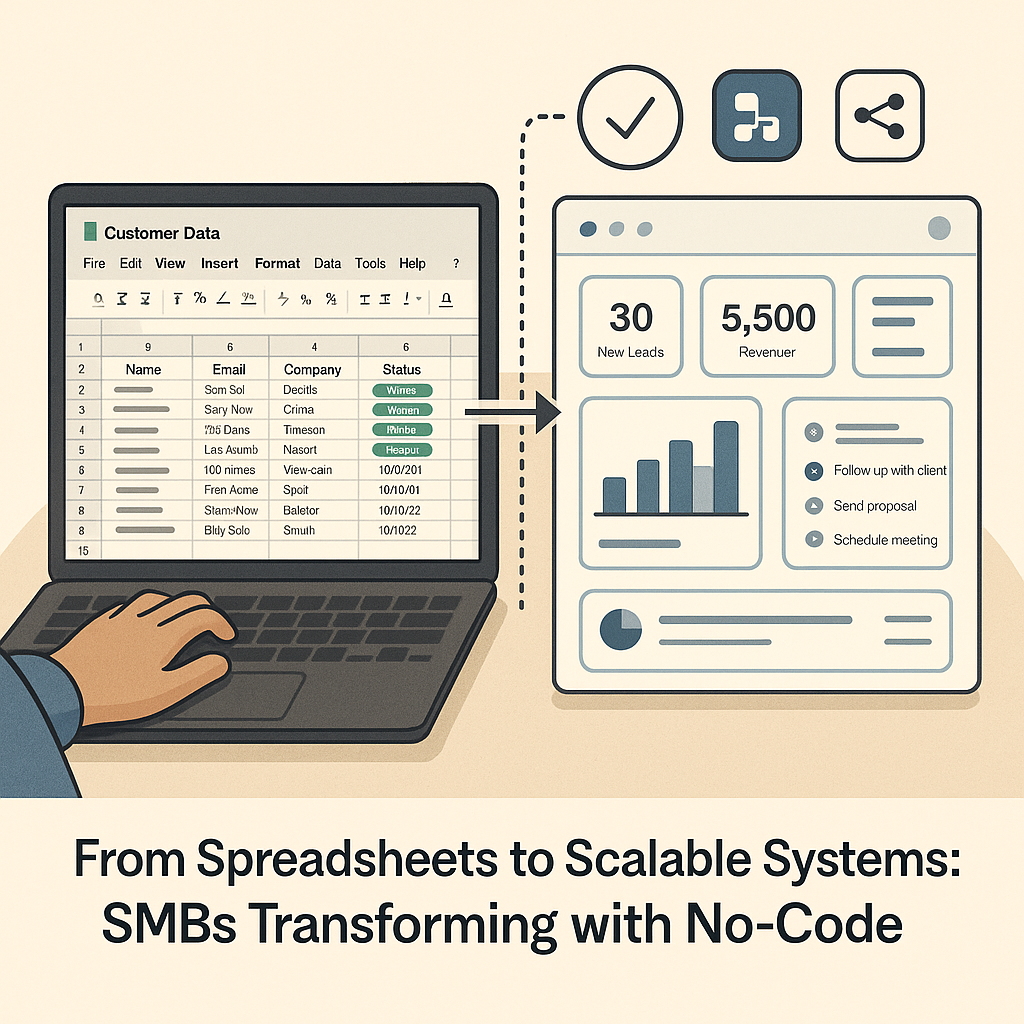
Why Most Digital Transformation Initiatives Fail at the Workflow Level

Digital Transformation Fails Where Work Actually Happens
Digital transformation has become a default strategic priority for small and mid-sized businesses. New platforms are adopted. Automation tools are implemented. Dashboards are rolled out. AI capabilities are discussed at the leadership level.
Yet despite strong intent and growing investment, most digital transformation initiatives fail to deliver meaningful operational results.
This failure is rarely caused by a lack of technology. It happens because transformation efforts do not reach the level where work actually happens. Workflows remain unchanged, fragmented, or implicit, while technology is layered on top.
When workflows are not redesigned, digital transformation becomes cosmetic. Systems appear modern, but execution remains fragile. Over time, complexity increases instead of decreasing.
Understanding digital transformation failure reasons requires looking past tools and into how work flows across the organization.
Digital Transformation Is Not a Technology Problem
A common misconception is that digital transformation is primarily a software decision.
Organizations equate progress with:
- Implementing a new CRM
- Automating manual tasks
- Migrating systems to the cloud
- Adding analytics or AI capabilities
These actions are often necessary, but they are not sufficient.
Digital transformation is fundamentally about how work is structured, executed, and governed. Technology only amplifies what already exists.
If workflows are clear, technology creates leverage.
If workflows are unclear, technology accelerates dysfunction.
This distinction explains why many SMBs struggle to realize value even after adopting advanced tools.
For a baseline definition of digital transformation, see
https://en.wikipedia.org/wiki/Digital_transformation
Where Workflow Failures Begin
Workflows Exist Only in People’s Heads

In many SMBs, workflows are undocumented and informal.
Critical processes depend on:
- Individual memory
- Tribal knowledge
- Ad hoc communication
When key people are unavailable, work slows or stops. Automation attempts fail because there is no stable process to automate.
Without explicit workflows, systems become containers for confusion rather than enablers of execution.
Automation Is Applied Before Structure
One of the most common automation mistakes SMBs make is automating existing processes without redesigning them.
If a process includes:
- Manual approvals without cr43iteria
- Repeated data entry
- Informal handoffs
Automation preserves these flaws and embeds them into software.
The result is faster execution of broken logic. Errors propagate quickly. Exceptions multiply. Trust in the system erodes.
This is a core driver of workflow failures digital transformation initiatives rarely address.
Ownership Is Undefined
Workflows often span departments. Sales hands off to marketing. Marketing hands off to operations. Operations hands off to finance.
When no one owns the workflow end to end:
- Issues go unresolved
- Accountability is diluted
- Improvements stall
Technology cannot compensate for missing ownership. Every scalable workflow requires a clearly defined owner responsible for outcomes, not just tasks.
Process Breakdown Digital Transformation Cannot Ignore
Handoffs Are Treated as Invisible
Every handoff is a risk point.
When responsibility moves between people or systems without clear rules, work stalls silently. Status becomes unclear. Follow-ups become manual.
Digital tools increase the number of handoffs by connecting more systems together. Without deliberate design, this creates fragility instead of efficiency.
Exceptions Are Not Designed For
Most workflows are designed for ideal scenarios.
Real operations are not ideal.
Data is incomplete. Approvals are delayed. Priorities change. Clients behave unpredictably.
When workflows cannot absorb exceptions:
- Teams bypass systems
- Manual workarounds proliferate
- Automation adoption collapses
This breakdown is often misinterpreted as user resistance, when it is actually a design failure.
Visibility Replaces Control
Many transformation efforts prioritize dashboards and reporting.
Leadership gains visibility, but execution teams lose control.
When workflows are designed around metrics rather than decisions, teams spend more time feeding systems than producing outcomes.
Execution shifts outside the system, and reported data slowly diverges from reality.
Why SMBs Are Disproportionately Affected
SMBs operate under constraints that magnify workflow failures.
They typically have:
- Limited process documentation
- High dependency on key individuals
- Rapid growth without operational stabilization
Automation is often introduced to relieve pressure. Instead, it exposes structural weaknesses.
Without disciplined workflow design, each new tool adds cognitive load rather than reducing it.
This explains why automation mistakes SMBs make compound faster than in larger organizations.
What Effective Digital Transformation Looks Like

Start With Workflow Clarity
Successful transformations begin by explicitly defining workflows.
This includes:
- Clear inputs and outputs
- Decision points and criteria
- Ownership and escalation paths
Only after this foundation exists does technology add value.
For a policy-level perspective on digital transformation and operational capability, reference
https://www.oecd.org/digital/
Design for Execution First
Execution precedes visibility.
When workflows are designed for action:
- Reporting becomes a byproduct
- Dashboards reflect reality
- Data supports decisions
This reverses the common failure pattern where systems are optimized for monitoring rather than doing.
Accept Imperfection
Effective systems tolerate real-world variability.
They allow:
- Partial data
- Manual intervention when needed
- Transparent exception handling
This preserves trust and keeps teams aligned with the system instead of working around it.
Treat Workflows as Living Systems
Digital transformation is not a project with an end date.
As teams grow and markets change, workflows must evolve. Regular review and refinement prevent silent degradation.
This mindset separates durable transformation from short-lived initiatives.
How This Applies to Singular Innovation Clients
At Singular Innovation, transformation efforts are anchored in workflow-first thinking.
Rather than starting with tools, we focus on:
- How work flows across the organization
- Where breakdowns occur
- What structure is required before automation
This approach allows technology to reinforce execution instead of compensating for missing structure.
Learn more about Singular Innovation’s approach at
https://www.singular-innovation.com/
Explore ecosystem alignment and delivery partners at
https://www.singular-innovation.com/partners
See how this approach translates into measurable outcomes through real engagements at
https://www.singular-innovation.com/success-stories
Conclusion. Fix the Workflow Before Scaling Digitally
Most digital transformation initiatives do not fail because of poor technology choices.
They fail because workflows were never rebuilt.
Automation layered onto unclear processes accelerates chaos. Visibility without execution creates false confidence.
The path forward is direct.
Design the workflow.
Assign ownership.
Build for exceptions.
Then let technology scale what already works.
Call to Action
If your organization is investing in digital transformation but struggling with execution, start with workflow clarity.
Schedule a discovery call to assess where structure is breaking down and how to rebuild it for scale:
https://app.iclosed.io/e/singularagency/schedule-a-discovery-call
This article was developed with the assistance of AI tools and reviewed by the Singular Innovation team for accuracy and context.
Heading
Dolor enim eu tortor urna sed duis nulla. Aliquam vestibulum, nulla odio nisl vitae. In aliquet pellentesque aenean hac vestibulum turpis mi bibendum diam. Tempor integer aliquam in vitae malesuada fringilla.
Mi tincidunt elit, id quisque ligula ac diam, amet. Vel etiam suspendisse morbi eleifend faucibus eget vestibulum felis. Dictum quis montes, sit sit. Tellus aliquam enim urna, etiam. Mauris posuere vulputate arcu amet, vitae nisi, tellus tincidunt. At feugiat sapien varius id.
Heading 3
Eget quis mi enim, leo lacinia pharetra, semper. Eget in volutpat mollis at volutpat lectus velit, sed auctor. Porttitor fames arcu quis fusce augue enim. Quis at habitant diam at. Suscipit tristique risus, at donec. In turpis vel et quam imperdiet. Ipsum molestie aliquet sodales id est ac volutpat.
Tristique odio senectus nam posuere ornare leo metus, ultricies. Blandit duis ultricies vulputate morbi feugiat cras placerat elit. Aliquam tellus lorem sed ac. Montes, sed mattis pellentesque suscipit accumsan. Cursus viverra aenean magna risus elementum faucibus molestie pellentesque. Arcu ultricies sed mauris vestibulum.
Heading 4
Morbi sed imperdiet in ipsum, adipiscing elit dui lectus. Tellus id scelerisque est ultricies ultricies. Duis est sit sed leo nisl, blandit elit sagittis. Quisque tristique consequat quam sed. Nisl at scelerisque amet nulla purus habitasse.

Heading 5
Morbi sed imperdiet in ipsum, adipiscing elit dui lectus. Tellus id scelerisque est ultricies ultricies. Duis est sit sed leo nisl, blandit elit sagittis. Quisque tristique consequat quam sed. Nisl at scelerisque amet nulla purus habitasse.
"Ipsum sit mattis nulla quam nulla. Gravida id gravida ac enim mauris id. Non pellentesque congue eget consectetur turpis. Sapien, dictum molestie sem tempor. Diam elit, orci, tincidunt aenean tempus."
Heading 6
Nunc sed faucibus bibendum feugiat sed interdum. Ipsum egestas condimentum mi massa. In tincidunt pharetra consectetur sed duis facilisis metus. Etiam egestas in nec sed et. Quis lobortis at sit dictum eget nibh tortor commodo cursus.
What is Singular Innovation
Lorem ipsum dolor sit amet, consectetur adipiscing elit. Suspendisse varius enim in eros elementum tristique.